
A switch cuts the live wire of the circuit it controls, thousands of times over the years. Its contacts end up worn and its screws work loose. Usually we replace it like for like, within half an hour. But when we open it up, we also look at what's behind it, because that's where we find the cause when it has overheated.
Signs it needs replacing
A switch that gets hot, crackles or gives off a visible spark when you flick it has a worn contact or a loose connection. If it's hot or smells of burning, switch off the circuit's breaker before anything else, and don't use it again until we've been.
Then there are mechanical faults: a rocker that stays pressed in or won't spring back, a cracked plate that leaves the mechanism showing. And the switch that no longer switches off at all, because its contacts have welded together: the light stays on. Before replacing it, do check that the lamp can't also be switched from somewhere else, as explained on our page about a bulb that stays on when the switch is off.
In older flats you still find porcelain rotary switches, or mechanisms screwed straight into the plaster with no back box. They sometimes work perfectly well, but their wires are as old as the installation. Replacing them is also a chance to check what state those wires are in.
Changing to a different model
If you're changing a switch, you may as well choose the one that will serve you best. Here are the options, and what each one involves:
- A two-way switch, to control the same light from two places. It needs a cable between the two switches: if there isn't one, we run it.
- Push buttons, for more than two control points, in a long hallway for example. They drive an impulse relay fitted in the panel.
- A dimmer, to adjust the brightness. You need LED bulbs marked "dimmable" and a dimmer designed for LEDs, otherwise the light flickers or keeps a glow once switched off.
- A switch with an indicator light, easy to find in the dark. With some LEDs, the indicator alone is enough to make the bulb glow when it's off.
- A presence detector, handy in an entrance or a cellar.
- A smart switch, controlled from your phone. Models fitted without a neutral wire are the trickiest with LEDs: we cover this on our home automation page.
As for finishes, the big brands (Legrand, Schneider, Hager) all fit a standard back box. Changing brand does mean changing the plate, though, and sometimes every switch in a room if you want them to match.
How we replace it
We switch off the circuit's breaker, then check with a voltage tester that nothing is live before taking anything apart. In an installation that's been reworked several times, a switch isn't always fed by the circuit you'd expect.
Next we identify the wires: the live, and for a two-way switch, the two strappers. We check their condition: crumbling insulation or blackened copper gets sorted before the new mechanism is connected. We fix it in its box, put the plate back, then turn the power back on and test it.
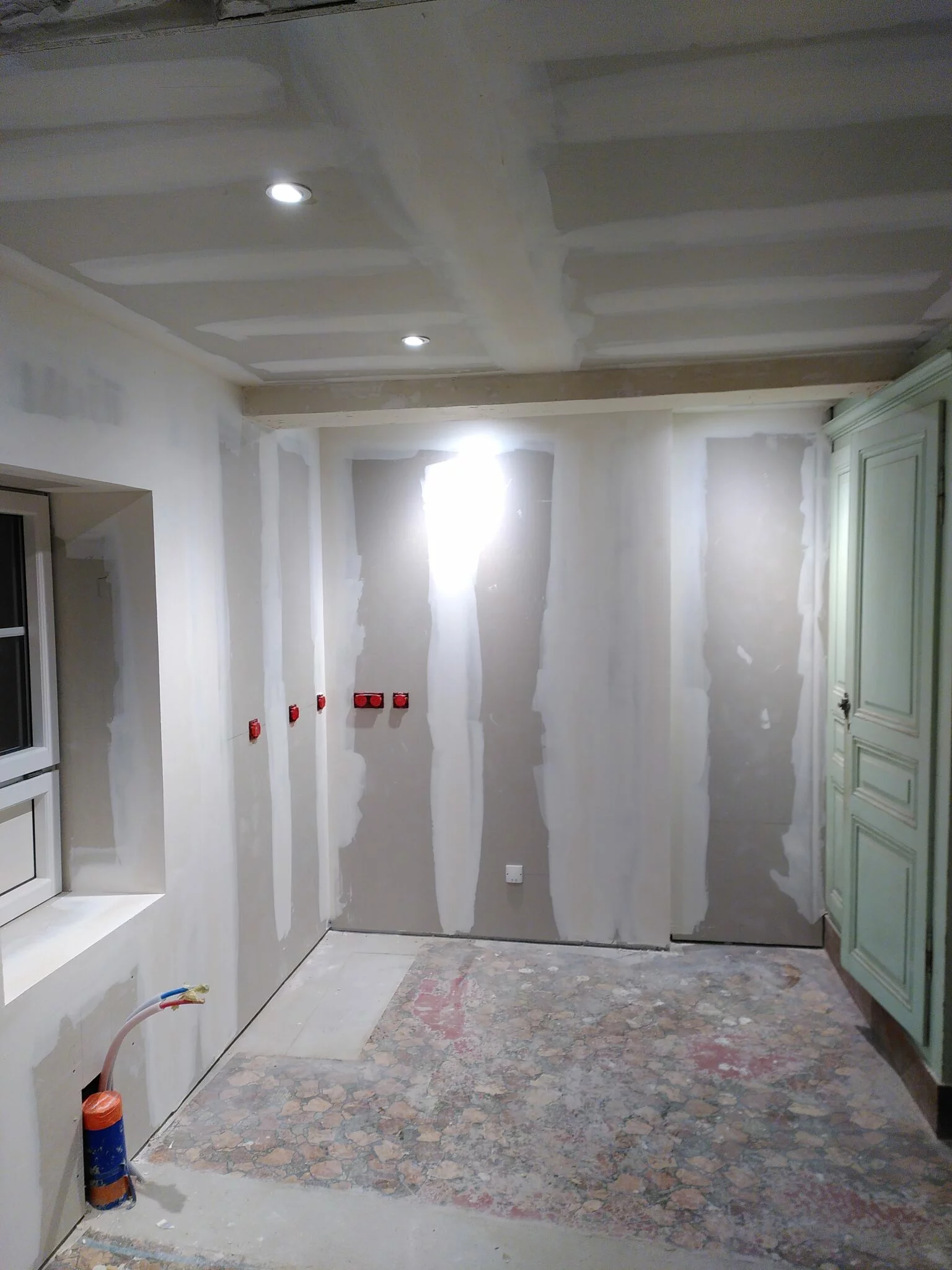
If there's no back box, we fit one, which means enlarging the hole slightly. And if the switch has overheated, we look for the reason: a loose connection on the switch itself or in a nearby junction box. Replacing the switch without dealing with the cause means finding it blackened again a few months later.
Doing it yourself?
Replacing a simple switch like for like is within reach of a careful DIYer. You need to switch off the right breaker and check that nothing is live with a proper voltage tester, not a neon screwdriver. Call us instead in these cases:
- it's a two-way switch, and you no longer know which wire went where;
- the wires are old and stiff, and their insulation is crumbling;
- there's no back box, or it's coming loose from the wall;
- the switch has overheated or blackened;
- you want to change to a different type of control.
What it costs
Replacing a switch like for like usually fits within our €132 incl. VAT call-out, travel and the first half-hour included, plus the price of the switch if we supply it. If you change several during the same visit, travel is only counted once.
Creating two-way switching or adding a control point means running a cable. We price it after seeing the wall, and you know the cost before work starts. Our call-out prices are online, and to book a visit, contact us.
For a socket rather than a switch, see our page on adding a socket, and for a new light point, lighting installation. If your switches are just one symptom of a tired installation, our full rewiring page helps you take stock.
Request your free quote. Reply within 48h, detailed quote within a week.
Request a quote