
A light fitting is the only part of an electrical installation you actually look at. Everything else — panel, conduit, circuits — is made to disappear; the fitting is made to be seen. That's what makes installing it particular: it has to be technically impeccable and aesthetically invisible. Here's what we fit, how, and the cases where the lighting point first has to be created because it doesn't exist.
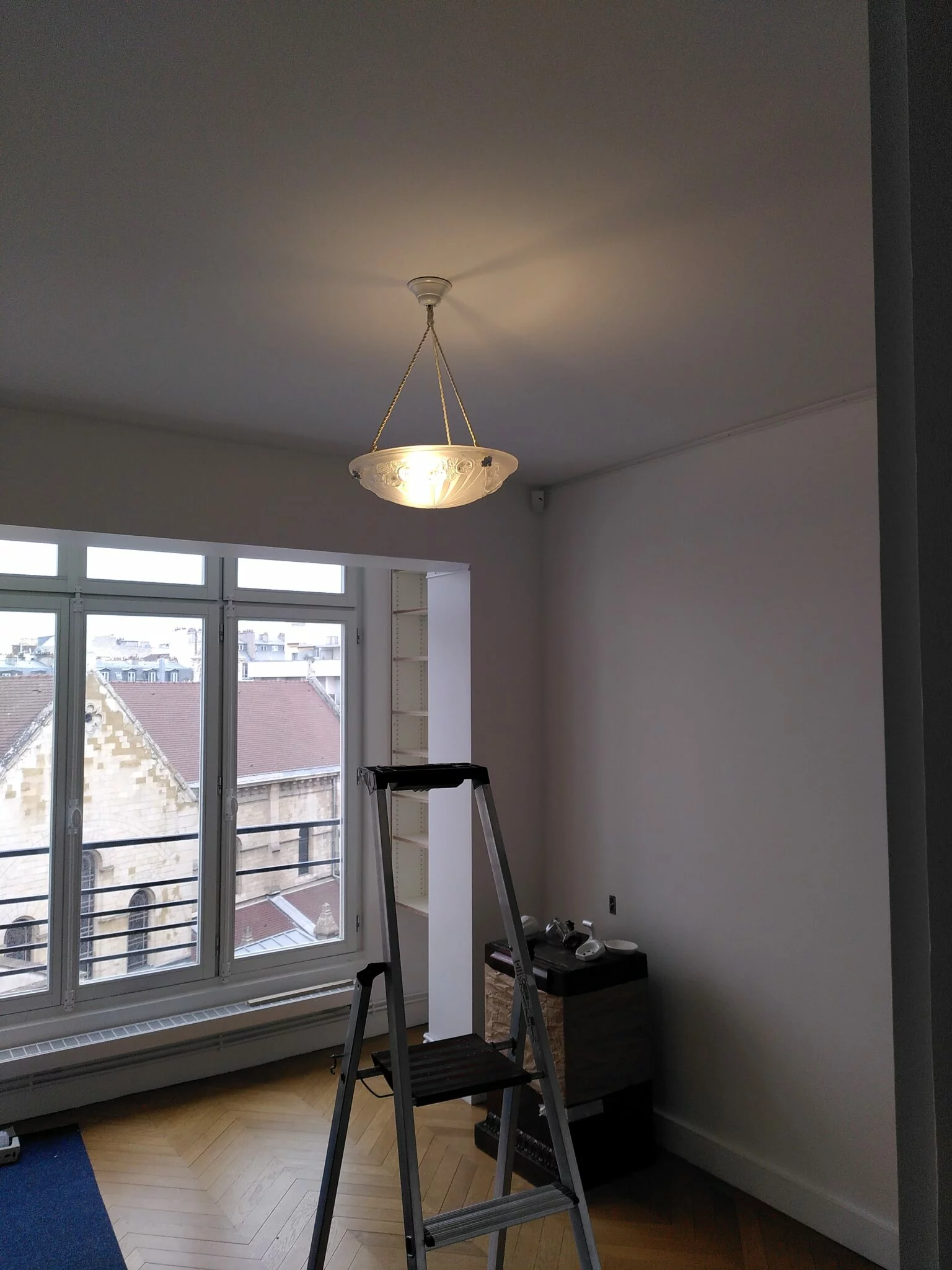
Pendants and chandeliers: a matter of weight and height
A light pendant goes onto an existing point in minutes. Things get complicated with weight and height. A chandelier of several kilos doesn't hang from plaster: you have to reach the structure — a joist in an old ceiling, the slab in a recent building — and fix a properly rated hook into it. Under a Haussmann-era ceiling over three metres high, the fitting is done from scaffolding, and the chain or cable length is set on site, at eye level, with you.
On a new point, the standard requires a luminaire connection device, the DCL: a box with a lampholder and plug that lets you change the fitting without touching the wires. Whenever we create or rework a lighting point, we fit one as a matter of course — it's what makes the next installation, in ten years' time, as simple as plugging in a socket.
Wall lights and ceiling lights: the art of creating the missing point
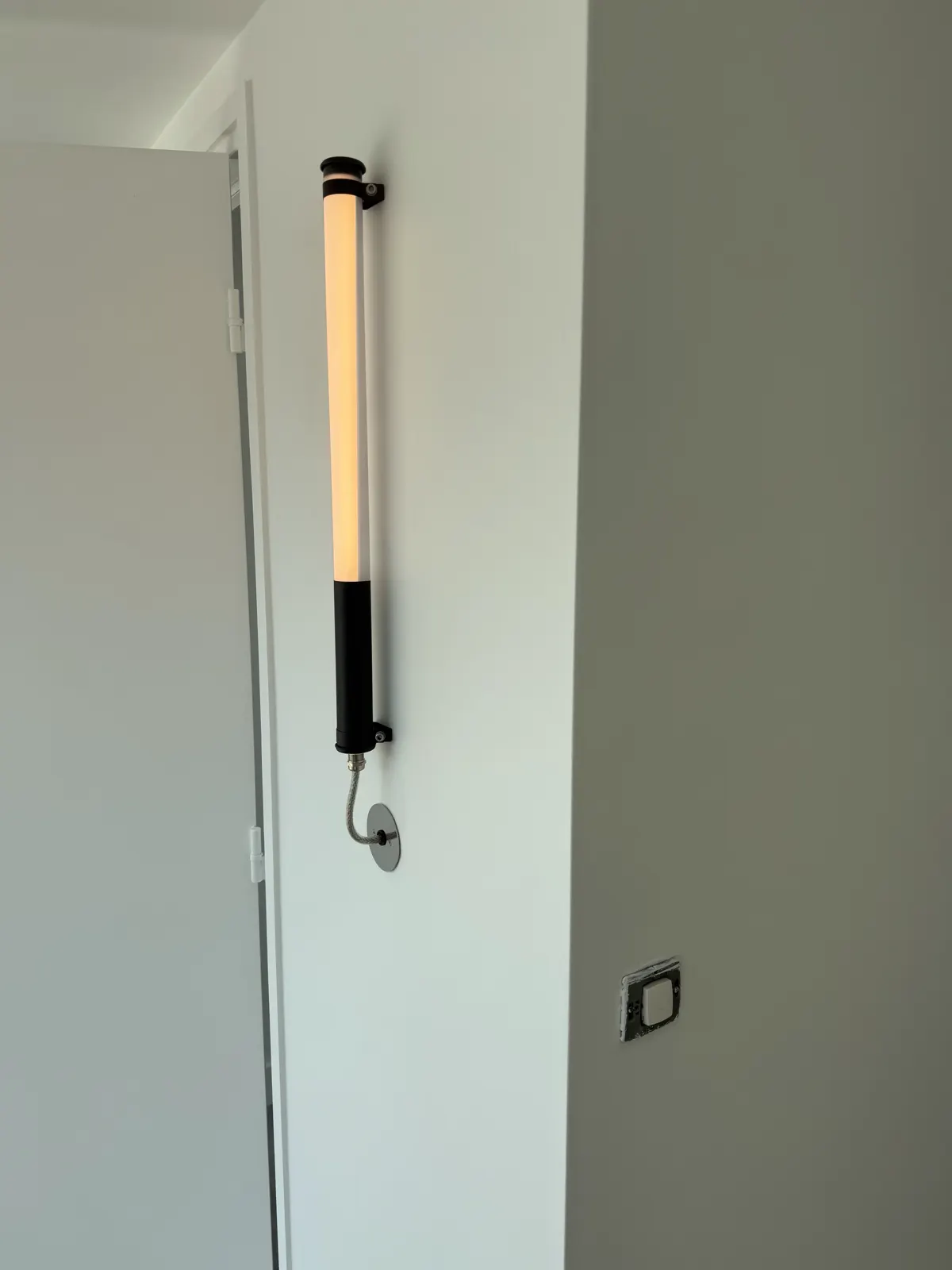
The wall light is the most requested fitting and the least often planned for. In most homes there's no electrical supply at mid-height on the living-room or bedroom walls. So it has to be created: from the ceiling lighting point, from a nearby socket, or from the panel if you want a separate control.
The route depends on the wall. In a hollow partition we run the cable inside; in a solid wall we chase and make good, or choose a neat surface-mounted run when the style allows. And we think about the control before drilling: a wall light that comes on with the ceiling light isn't the same thing as one on its own switch, or two-way from the door and the bed.
Recessed spots: what happens above the ceiling
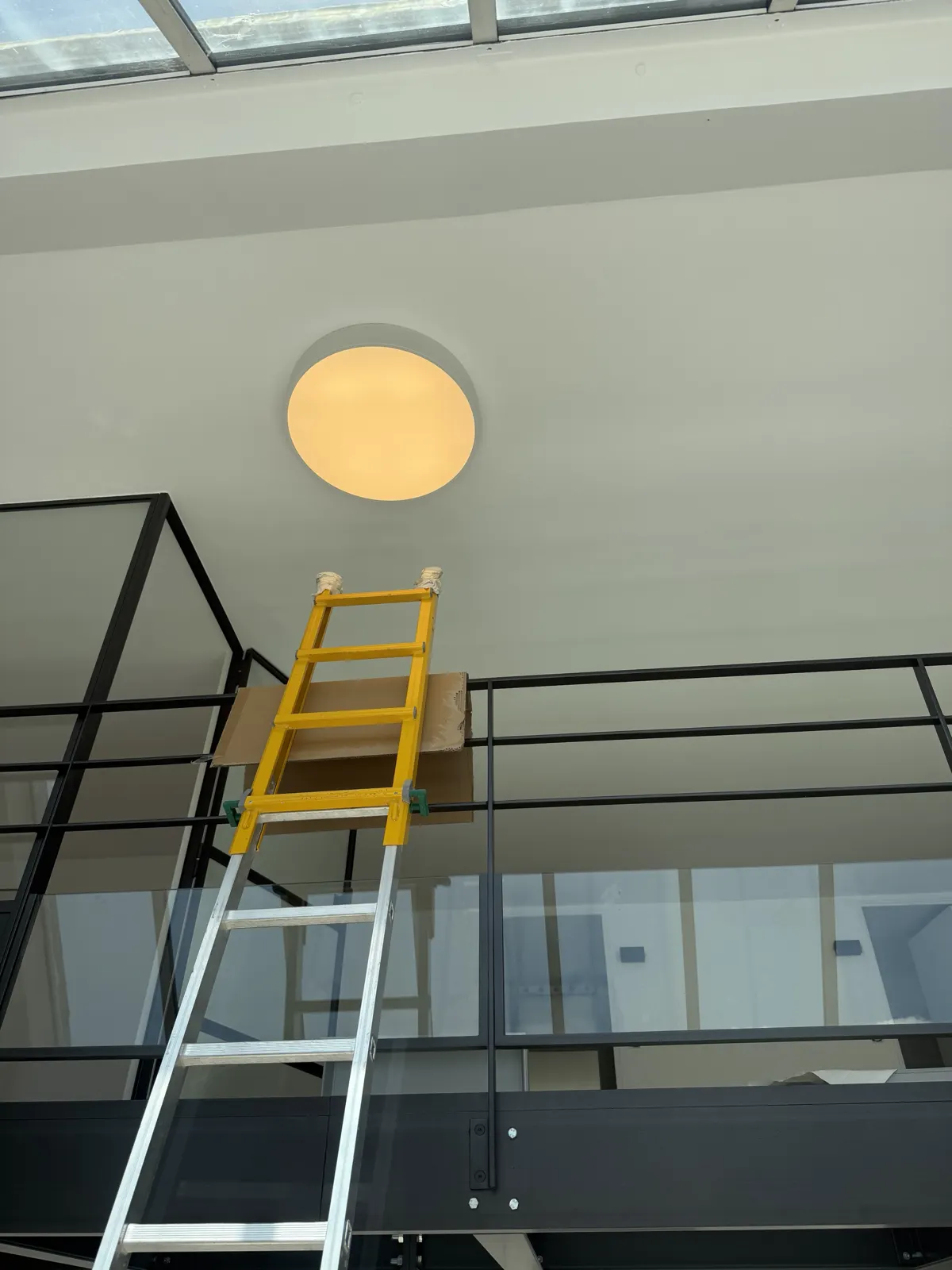
Recessed spots give clean light and an uncluttered ceiling, provided there's room above. They need a suspended ceiling or a void, enough space around each spot to dissipate heat, and models suited to insulation when there is any. In a bathroom the protection rating changes by zone: a spot above the shower isn't the same as one in the corridor.
We work out the number and layout for the room — too many spots flatten a room, too few leave dark areas — and plan the control: a single switch, two groups, or a dimmer. On that last point, a detail that saves a lot of disappointment: not all LEDs dim, and an unsuitable dimmer makes spots flicker. We match the two before fitting.
What an installation includes with us
We work dead, cutting the circuit concerned at the panel and verifying it before opening anything. We check for an earth when the fitting needs one, replace a tired lampholder or box rather than build on it, and don't leave without having tested the light and its control with you.
A simple fitting on an existing point often falls within our €132 incl. VAT callout, which covers the first half hour. Creating a lighting point, fitting at height or a run of spots is priced after a visit, line by line. When the project is part of a wider rework of the home, lighting is planned on the drawing with the rest — see our apartment rewiring page — and if you'd like scenes or remote control, home automation takes over.
Our electrician pricing in Paris is public; for a fitting or a lighting project, contact us with a photo of the light and the ceiling — we can often answer before we even come out.
Request your free quote. Reply within 48h, detailed quote within a week.
Request a quote